
In this article
- The hidden cost of the boardroom
- Nature-based leadership and the biophilia effect
- Measuring the ROI of nature-based strategy meets
- Executing the shift to the Sahyadris
- Designing a high-output wellness itinerary
- Why the Sahyadris outperform city hotels
- Frequently Asked Questions
- How does a nature retreat actually increase productivity?
- What is the typical ROI for a corporate wellness retreat?
- Is Igatpuri accessible for large corporate groups?
- How is this different from a standard company off-site?
- Do we need to give up all technology during the retreat?
- Which is better for strategy meets: Lonavala or Igatpuri?
- Can we host formal presentations in a nature resort?
- How long should a corporate wellness retreat last for maximum impact?
The hidden cost of the boardroom
Executive burnout is no longer a personal failing; it is a line item on the balance sheet. When leadership teams spend months trapped in sterile offices under fluorescent lights, decision-making slows and creativity stalls. This cognitive fatigue leads to expensive errors and high turnover among senior management.
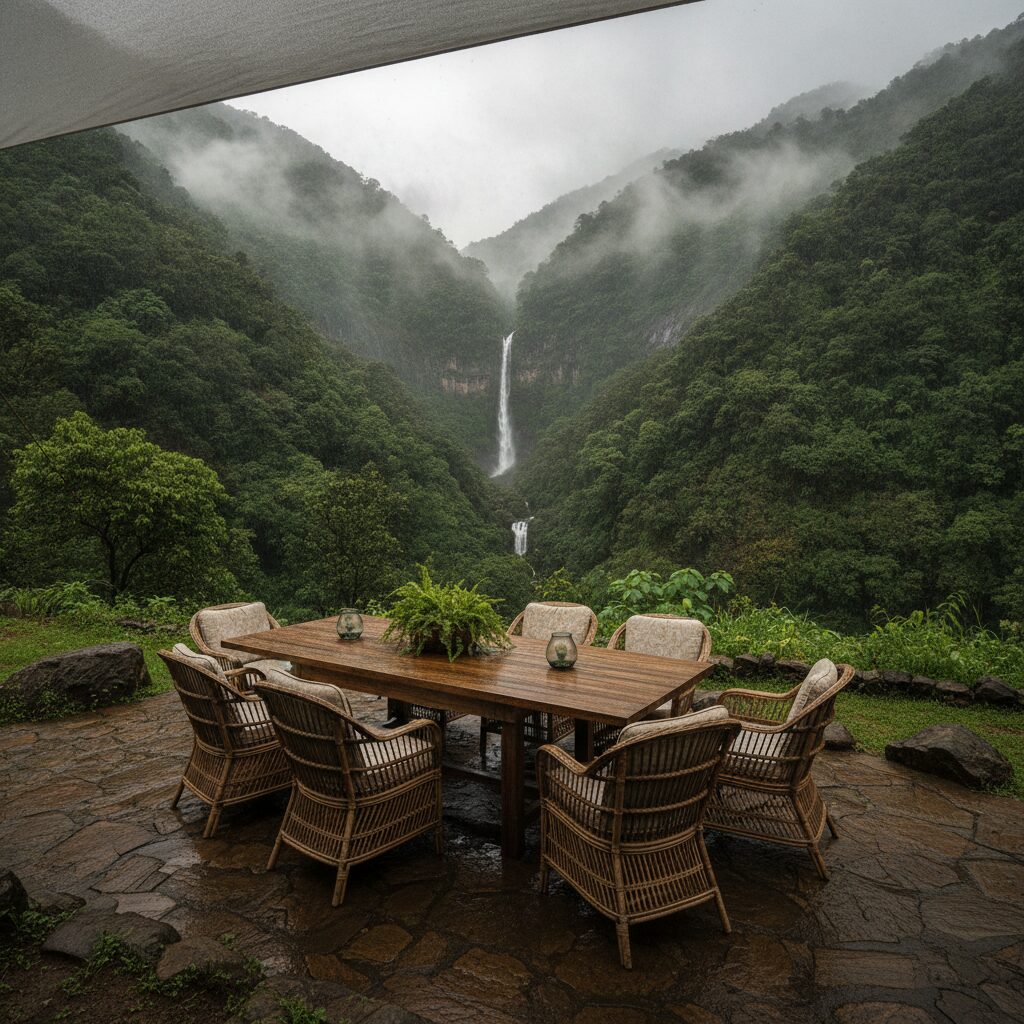
Moving a corporate strategy meet to the Sahyadri range is not about a vacation. It is a strategic move to recover cognitive function. A corporate wellness retreat Igatpuri allows leaders to exit the cycle of constant digital noise and enter a state of high-focus recovery, which is the only way to produce a genuine ROI on leadership development in 2026.
Nature-based leadership and the biophilia effect
Biophilia is the innate human tendency to seek connections with nature. In practice, this means that the brain functions differently when surrounded by greenery than it does in a concrete room. According to a 2025 report by the Global Wellness Institute, employees who spent time in nature-centric environments showed a 15% increase in problem-solving speed.
When you move a strategy session to the lush green surroundings of Igatpuri, you remove the psychological barriers created by city fatigue. The misty climate and open air signal the nervous system to move from ‘fight or flight’ mode into a ‘rest and digest’ state. This is where the most critical breakthroughs happen. Leaders stop reacting to immediate crises and start thinking about long-term growth.
Measuring the ROI of nature-based strategy meets
Quantifying the value of a retreat requires looking at specific metrics. The ROI of ‘Nature-Based Leadership’ manifests in three primary areas: decision speed, employee retention, and cognitive clarity.
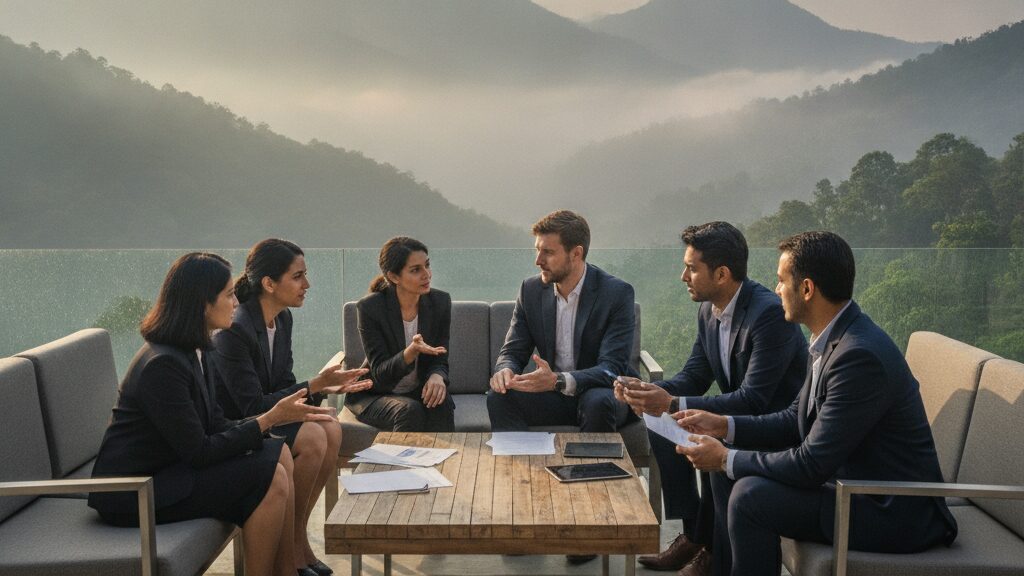
Decision speed improves when the ‘noise’ of the office is removed. In one observed scenario, a leadership team that shifted its Q3 planning from a city hotel to a nature resort reached a consensus on a year-long roadmap in two days, a process that previously took three weeks of fragmented Zoom calls. This reduction in time-to-decision has a direct financial value.
Retention is another critical factor. Senior executives are more likely to stay with a company that invests in their mental health. A leadership team that feels seen and rested is less likely to be poached by competitors. When you integrate a digital detox into the itinerary, the recovery is deeper, and the loyalty to the organization strengthens.

Executing the shift to the Sahyadris
The transition from a boardroom to the mountains must be intentional. The goal is to ‘un-hotel yourself.’ This means moving away from the traditional conference room setup and using the environment as part of the workspace.
Logistics are simpler than they used to be. With Samruddhi Highway connectivity, the journey from Mumbai, Thane, or Nashik is fast and efficient. The focus should be on the contrast. Start the morning with a strategy session in a conference hall in Igatpuri that opens into the gardens, then move the afternoon brainstorming session to a walking trail in the Sahyadri range.
The failure mode for most retreats is over-scheduling. If the itinerary is as packed as a city workday, the brain never exits the stress state. The most successful retreats leave 30% of the day unscheduled. This white space is where the ‘aha’ moments occur, often during a quiet walk or a visit to The Grand Gardens SPA.
Designing a high-output wellness itinerary
A high-ROI retreat balances cognitive effort with physical restoration. The structure should follow a pattern of intensity and release.
Morning blocks should be reserved for heavy lifting: financial reviews, risk assessment, and strategic pivots. These require the most mental energy. Mid-day should involve movement. A short trek or a nature walk allows the subconscious mind to process the morning’s data. This is why the most effective ideas often emerge during the walk, not the presentation.
p>
Evening sessions should focus on team bonding and vision alignment. In the lush natural setting of the Sahyadris, the social barriers between different levels of management often dissolve. This creates a psychological safety that is impossible to replicate in a corporate office. When leaders feel safe, they communicate more honestly, leading to faster problem resolution.
Why the Sahyadris outperform city hotels
City hotels provide luxury, but they do not provide restoration. A hotel in the city is still an extension of the urban environment. The sound of traffic, the sight of skyscrapers, and the proximity to the office keep the mind in a state of low-level vigilance.
The luxury nature resort in Igatpuri model works because it provides a total sensory shift. The smell of wet earth, the sight of the misty peaks, and the silence of the forest act as a ‘reset’ button for the prefrontal cortex. This is the biological basis for the ROI of nature-based leadership.
For those planning their Q3 or Q4 milestones, the timing is critical. The current shift toward wellness-centric retreats is not a trend; it is a response to a decade of increasing burnout. Companies that prioritize this now will enter 2027 with a leadership team that is cognitively sharper and emotionally resilient.
Frequently Asked Questions
How does a nature retreat actually increase productivity?
It reduces cognitive load by removing urban stressors. This allows the brain to recover focus and process complex information more efficiently.
What is the typical ROI for a corporate wellness retreat?
ROI is seen in faster decision-making cycles and reduced executive turnover. Some firms report a significant drop in burnout-related leave following nature-based strategy meets.
Is Igatpuri accessible for large corporate groups?
Yes, the Samruddhi Highway has significantly reduced travel time from Mumbai and Nashik. It allows for seamless transport of large teams without the usual transit fatigue.
How is this different from a standard company off-site?
Standard off-sites focus on activities and entertainment. A wellness retreat focuses on cognitive restoration and the psychological link between nature and leadership.
Do we need to give up all technology during the retreat?
Total disconnection is not required, but scheduled ‘digital-free’ blocks are essential. This ensures the mind fully detaches from the office loop to enable deeper thinking.
Which is better for strategy meets: Lonavala or Igatpuri?
Igatpuri generally offers more secluded, nature-centric environments. This is better for deep strategic work compared to the more crowded tourist hubs.
Can we host formal presentations in a nature resort?
Yes, professional conference facilities are available. The key is to alternate these formal sessions with outdoor breaks to maintain mental energy.
How long should a corporate wellness retreat last for maximum impact?
Three days and two nights is the sweet spot. This allows enough time for the brain to shift gears without disrupting operational continuity.
This corporate wellness retreat Igatpuri is the smartest way to secure your leadership’s mental clarity and drive a higher ROI for your next strategic cycle. Plan your executive recovery session with The Grand Resort today and receive a custom itinerary design at no extra cost.
Ready when you are